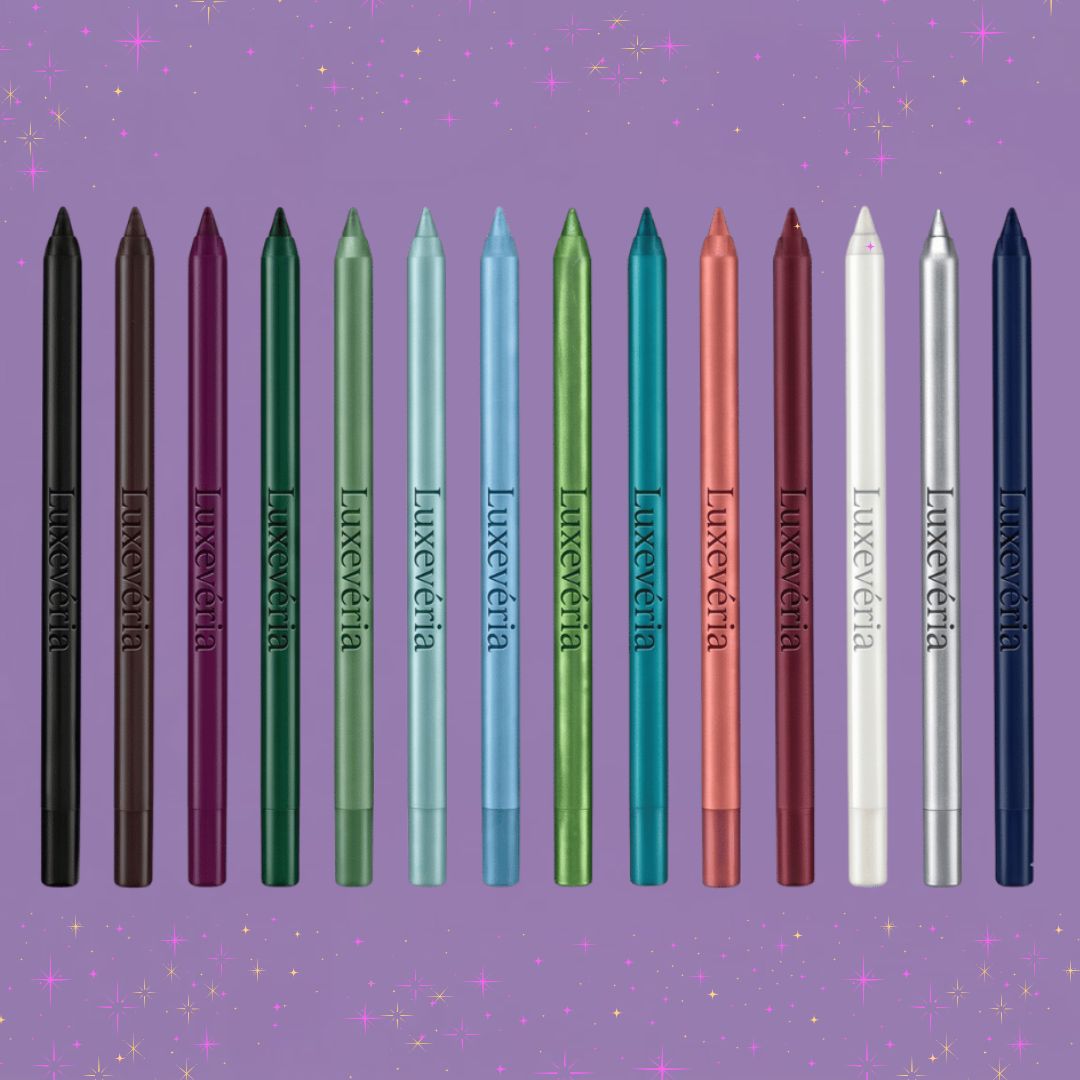
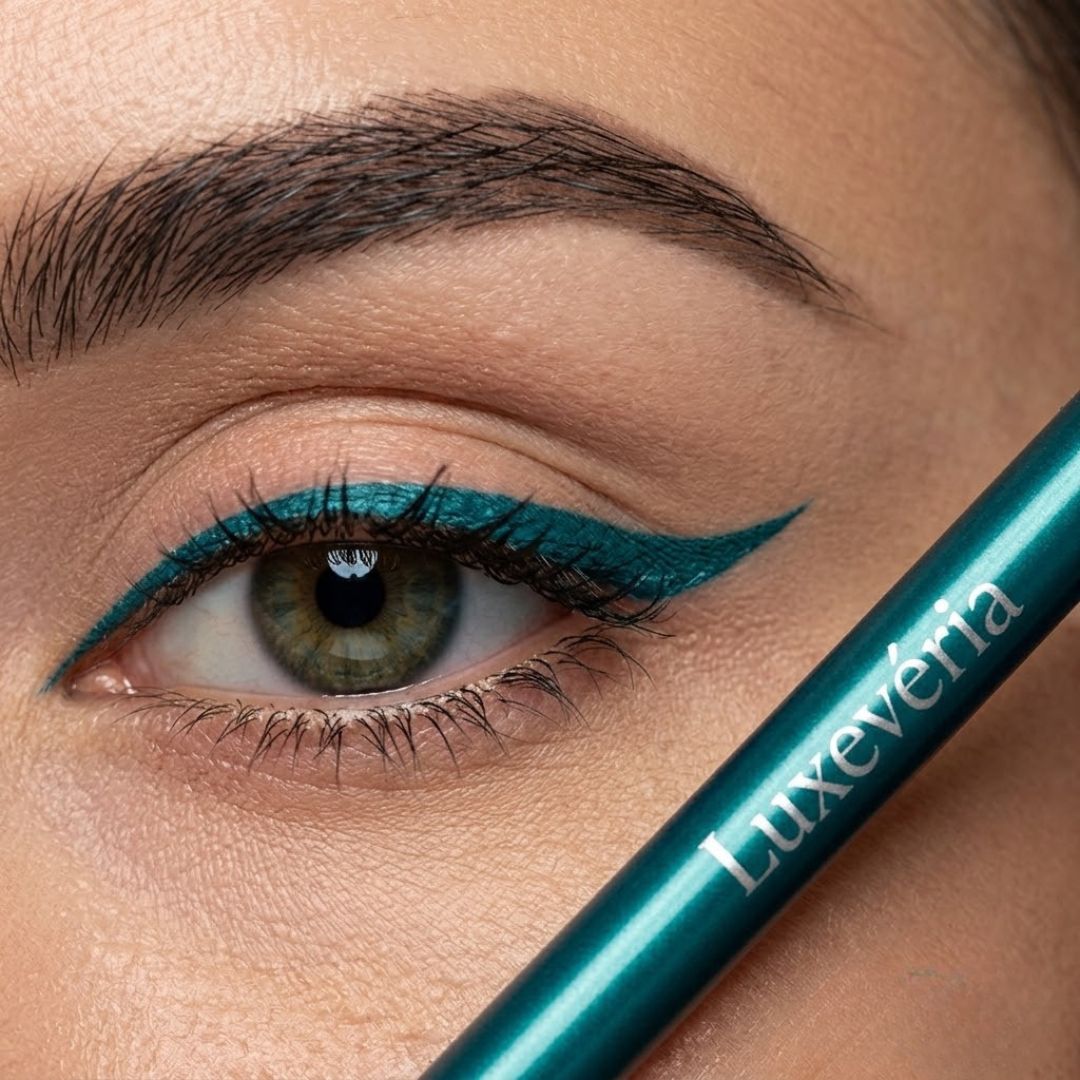
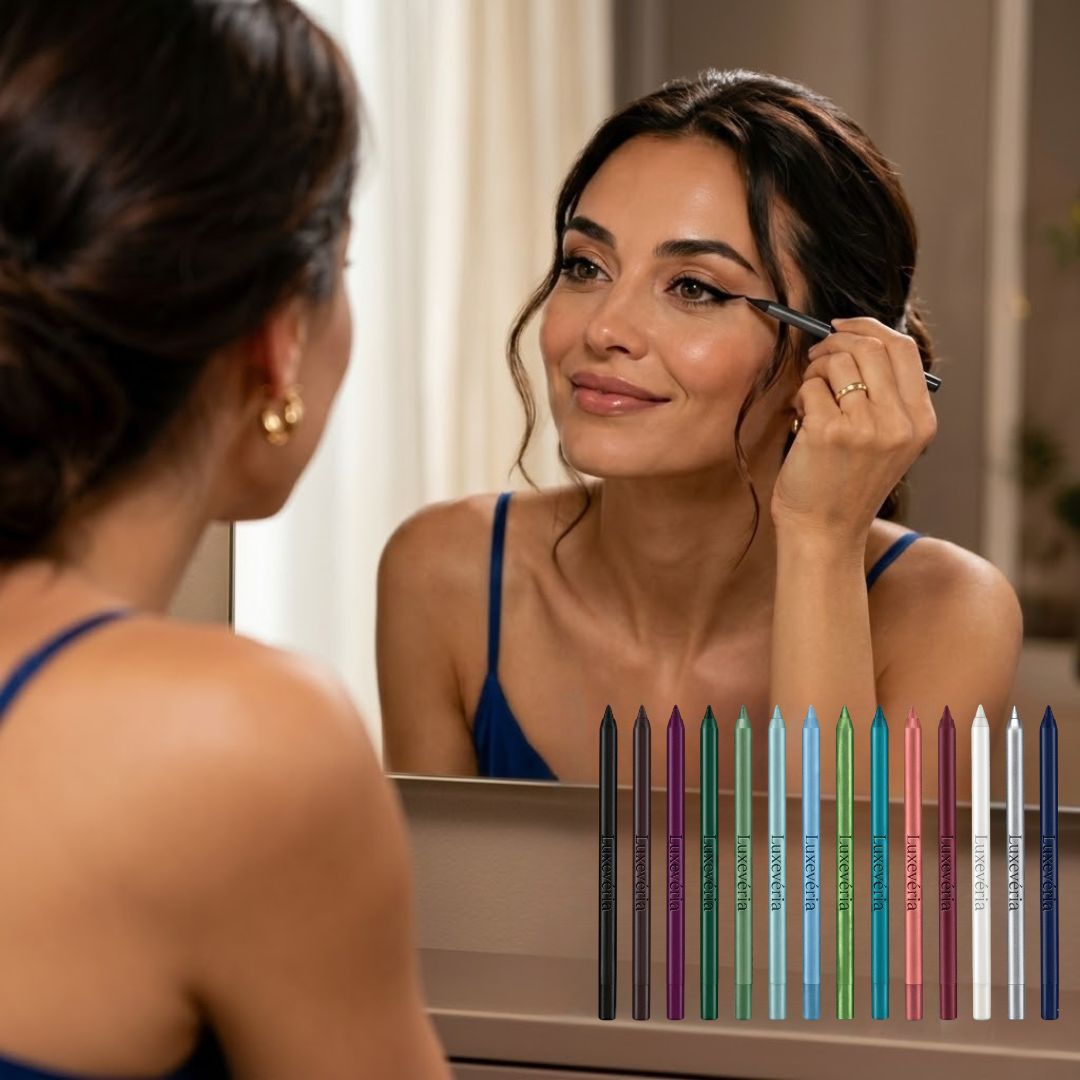

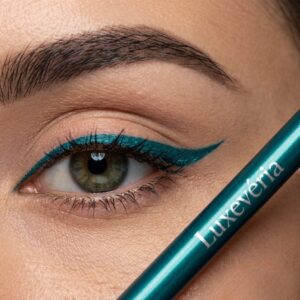
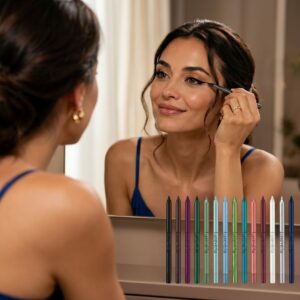
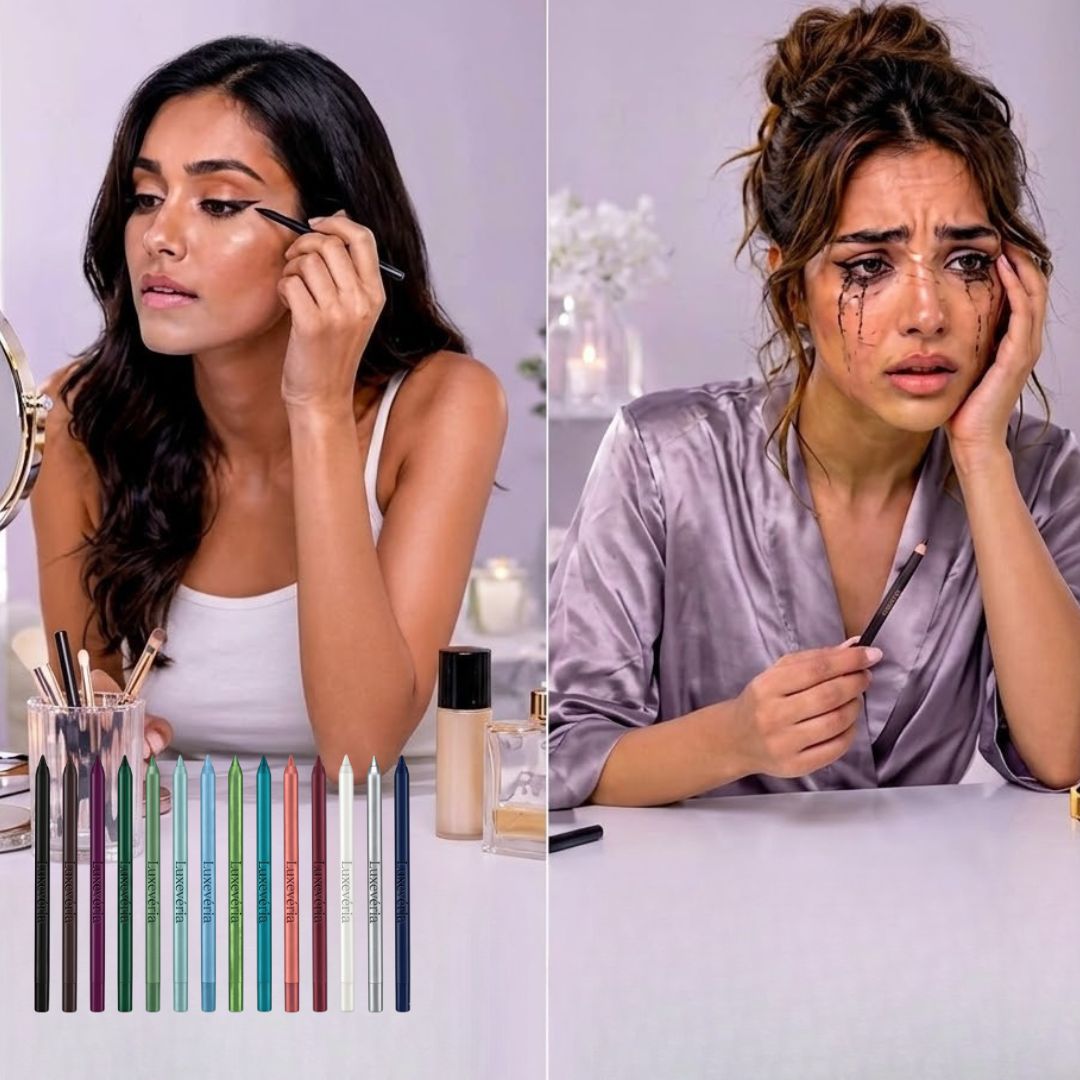
Luxevéria Waterproof Eyeliner Pencil
Same category as the last one — a page engineered to feel scientific and populist while stacking claims that don’t survive scrutiny. Here’s what jumps out.
Fabricated or unverifiable claims:
- “Voted #1” style social proof and the “as seen on” bar — no publications named. If a product were actually featured, they’d show the logos.
- The Reddit quote from “Kenny9532” — this format (username, subreddit, dramatic self-deprecating story) is a standard copywriting device. It may be real, invented, or plucked from a random thread and reframed. Either way, one anecdote isn’t evidence of anything about this product.
- “Dermatologist-tested” — legally almost meaningless. It means someone with the title tested it once. It’s not the same as “dermatologist-recommended” or clinically studied.
- “2,847 Verified Reviews” — verified by whom? Not by a third party like Trustpilot or a retail platform with a return-based verification system — those get named.
- “Egyptian queens” and “Max Factor 1914” — the ancient-wisdom-plus-modern-science origin story is a template. Ancient kohl was largely galena (lead sulfide) and other mineral pigments; it wasn’t a “dense lipid barrier matrix,” and it wouldn’t pass any modern safety review. This is myth-making, not formulation history.
Misleading science framing:
The Meibomian gland / lipid dissolution pitch sounds technical but is doing sleight of hand. Yes, eyelid oils affect makeup wear. No, that doesn’t mean every other liner is a “wax crayon chemically programmed to dissolve” and this one has uniquely cracked the code. Trimethylsiloxysilicate (MQ resin) is a common film-former used across the entire long-wear cosmetics industry — in drugstore liners, prestige liners, long-wear lipsticks, sunscreens. It’s not a proprietary breakthrough. Framing a widely-used ingredient as a secret the “cartel” is hiding is the tell.
The economic conspiracy angle:
“Luxury conglomerates engineer low structural integrity to guarantee you come back” / “cartel markup” / “consumer liberation” — this is a rhetorical pattern designed to convert skepticism of big brands into trust in the seller. It bypasses the question of whether this specific product is any good by making the choice feel political.
Inconsistencies:
- “Formulated Without… Ammonium Acrylates Copolymer” — this is called out as a bad ingredient to be avoided, but ammonium acrylates copolymer is just a common film-former, not a known irritant or health concern. It’s being villainized to make the “free from” list look impressive.
- The “24-month freshness” claim on an eye product is unusually long and worth ignoring — eye cosmetics are generally recommended to be replaced every 3–6 months once opened due to bacterial contamination risk. Claiming 24 months of freshness on an eye product is arguably unsafe advice.
Notice the pattern across both Luxevéria pages you’ve shown me:
Same brand name, same “50% off ending tonight” urgency, same “sold out repeatedly” scarcity, same invented awards, same “ancient wisdom meets modern science” origin story, same villain (Big Beauty / Big Derm), same salvation (a $20-ish product delivering $3,000 clinic results). This is a dropshipping/DTC playbook, not a coherent brand with a real R&D pipeline. The name being sprayed across unrelated categories (scar gel, eyeliner) is itself a signal — legitimate specialty brands don’t jump from surgical scar treatment to eyeliner.
If you want a liner that actually stays put, the honest answer is that MQ-resin-based long-wear liquid liners are widely available (Kat Von D Tattoo Liner, Stila Stay All Day, NYX Epic Ink, drugstore options from Maybelline and L’Oréal all use similar film-forming chemistry). Any of them will perform comparably to whatever’s in this tube for a fraction of the drama.
What’s prompting the research into these two products — are you evaluating them as a buyer, or looking at them from another angle (writing about scam marketing, checking on a family member’s purchase, something else)? I can be more useful if I know.
| Bundle & Save | Buy 1, Buy 2, Buy 3 |
|---|